The Symptom: Recommendations That Did Not Hold Up
The issue started as a series of disappointed faces in the debrief room. Students would show up for their checkrides, documents in hand, with a flight instructor's signature on the application. Too often, the examiner would get halfway through the oral or early in the flight and shake their head. The applicant just was not ready.
At first, it looked like a few isolated mistakes, a weak cross-country plan, a missed regulation, a rusty stall recovery. Over a few months, it became clear there was a pattern. Too many students were being signed off when they could not reliably perform to the standard. The result was failed checkrides, more stress for students, and a reputation problem for the school.
The root cause was not hard to spot. In a one-instructor shop, the pressure to keep students moving was always present. There was no second set of eyes on student readiness. The only gate was the primary instructor's judgment, which is always vulnerable to bias, optimism, and time constraints.
Keep reading: Why Checkride Dates Slip: How DPE Supply Shapes Your Calendar
Borrowing the Part 141 Stage Structure Without the Certificate
The owner had taught in Part 141 academies before opening the Part 61 operation. In those schools, no student moved ahead without passing a stage check. Each stage ended with an assessment by an instructor who was not the primary teacher. This gate was firm. It kept the school honest and protected both student and business.
But the school in question was not a 141 program. There was no written manual, no stage checks required by regulation, and no FAA-approved syllabus to enforce. The pace was set by the student and the instructor. The result was flexibility, but also the risk of soft standards and skipped steps.
After the third failed checkride in two months, the owner decided to borrow the stage check concept anyway. The policy: every student would have to pass a formal stage check at key points in their training, even though the school did not hold a 141 certificate. The idea was to enforce internal discipline and protect student progress, using the proven structure without the regulatory weight.
Writing Stage Completion Standards From the ACS
The next challenge was defining what the stage check would measure. In a 141 program, the syllabus spells out each stage, and the requirements are mapped to the practical test standards. In Part 61, the only official measuring stick is the Airman Certification Standards (ACS).
Many schools rely on checklists or memory. This school wanted something better. The two instructors sat down with the ACS and broke the training into stages: pre-solo, solo cross-country, and checkride prep. For each stage, they built a checklist directly from the relevant ACS tasks. If the ACS required a "satisfactory" short field landing with specified tolerances, it went on the checklist. If a knowledge element was listed in the ACS, it became a required discussion point.
Turning the ACS Into a Working Document
The instructors avoided writing vague standards like "demonstrates understanding." Instead, they pulled the specific completion standards word for word. For example, the solo cross-country stage check required demonstrating crosswind takeoffs and landings within ACS tolerances, plus oral explanations of weather decision making, airspace, and lost procedures.
The result was a document that could be used straight across different instructors and for every student. It answered the question, "What exactly does 'ready' mean?"
Keep reading: The Private Pilot Checkride Paperwork Checklist for Instructors
Who Gives the Stage Check When There Are Only Two of You
One of the main hurdles for a small school is finding someone to give a truly independent assessment. With only two instructors, the owner worried about fairness, scheduling, and possible tension between colleagues. But the risk of not having a gatekeeper was greater.
Internal Rotation and Professionalism
The solution was a strict internal rotation. No instructor could conduct a stage check for their own student. If one instructor had taught a student for the first twenty hours, the other took the right seat for the stage check flight and oral.
To keep the process professional, the instructors agreed to a standard debrief framework. The stage check instructor gave feedback directly to both the student and the primary instructor, using the ACS-based checklist as the only authority. The primary instructor could discuss results but could not override a failed stage check. This process was written down and posted in the office.
Handling Schedule Conflicts
Inevitably, scheduling got tight. When both instructors had students approaching a stage check, flights had to be shuffled. Occasionally, a student waited an extra week for an available slot. But both instructors agreed: sticking to the process was more important than pushing a student through before they were ready. The benefit was clear when students began passing their checkrides without surprises.
Turning an Unsatisfactory Stage Check Into a Training Plan
One fear was that students would see a failed stage check as a setback. The instructors wanted to turn it into a learning opportunity instead of a discouragement.
Objective Deficiency Tracking
Because the checklist was drawn from the ACS, every "unsatisfactory" item was specific. Instead of telling a student, "You need to improve your landings," the debrief documented exactly which element was weak, maybe the approach was unstable, or crosswind correction was inconsistent. The instructor and student reviewed each missed item together and set clear exercises for the next lessons.
Documenting Progress
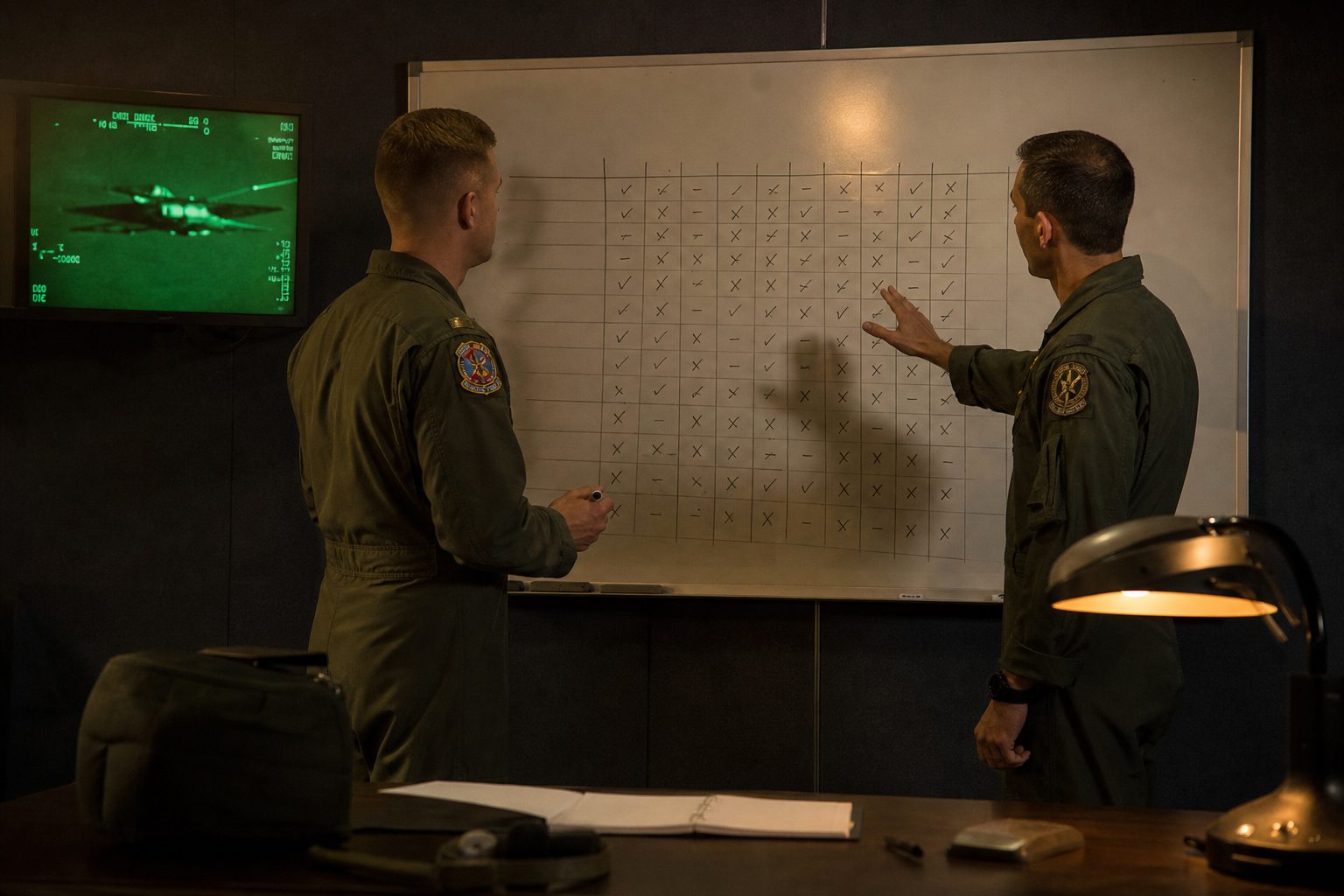
All results went into a binder: one page per student. Each checklist was stapled to the back of the lesson record. This made it easy to see trends, like repeated trouble with steep turns or knowledge gaps in airspace rules. The next stage check focused on reviewing previous weaknesses to verify improvement.
The school found that most students needed only one or two extra lessons to turn a failed stage check into a pass. More importantly, students began to view the process as fair and rigorous, not arbitrary. They knew exactly what was expected and how to get there.
See how PreflightLog handles this for flight training
What It Did to Scheduling and Aircraft Utilization
The new stage check system changed the flow of students through the program. Previously, students moved as quickly as their individual skill allowed, sometimes skipping steps or glossing over weak areas. Now, the stage checks created natural gates, and some students slowed down while others sped up.
Managing Bottlenecks
At first, aircraft utilization dipped. With more stage checks and some students needing extra lessons, there were gaps in the schedule. But within two months, the pattern stabilized. Students who passed stage checks tended not to repeat lessons unnecessarily down the road. The school actually saw a reduction in late-stage cancellations and fewer last-minute remedial flights before checkrides.
Instructor utilization improved as well. Instead of both instructors being equally booked with repetitive training, each spent less time reteaching basics to students who should have mastered them earlier. The schedule became more predictable, and both instructors reported less burnout.
Aircraft Time Saved on the Back End
One unexpected benefit was a decrease in the number of checkride re-tests. Since only prepared students moved to the final stage, the DPEs saw fewer failures, and students spent less total time in the airplane. The school was able to fit in more discovery flights and introductory lessons as a result.
What the School Would Do Differently
Looking back after a year, the owner and staff found a few areas for improvement. First, they would have started by documenting all stage check results electronically, not just on paper. Paper records were easy to misplace, and tracking trends across multiple students took too long.
Second, they would have formalized their training plan system sooner. Early on, some students drifted after a failed stage check because their remedial plans were vague. When the school started requiring a written, itemized plan with target completion dates, student progress became much more reliable.
Finally, they would have invested in a standardized tracking tool from the outset. Manually updating checklists and training records was tedious and prone to error. An electronic solution, built specifically for tracking progress against the ACS, would have made it much easier to spot patterns, generate endorsement records, and monitor readiness for stage checks in real time.
For small schools and independent instructors, tools that track student progress against practical test standards, manage endorsement records, and flag stage check readiness can take much of the friction out of the process described here. They help ensure consistency and transparency, even with limited staff and resources.