Who Counts as a Flight Training Provider Under the Rule
Under 49 CFR 1552, the Transportation Security Administration (TSA) defines a flight training provider broadly. Any individual or organization giving flight instruction falls under this rule. This includes independent CFIs, small flight schools, and operations at both Part 61 and Part 141 schools.
If you offer instruction in aircraft that require a US pilot certificate, fixed-wing, rotorcraft, jet, or even simulator-based training, you are considered a provider. The rule covers both initial and recurrent training, and applies to anyone who gives ground or flight instruction to non-US citizens or non-permanent residents.
Even if your operation is just you and a few students at a small airfield, these requirements are not optional. The TSA's definition does not depend on the size of your business, the number of students, or whether you are teaching full time or part time. If you charge for instruction, you must comply.
Keep reading: How a Two Instructor School Rebuilt Its Stage Check System
Verifying Citizenship for Every Student, Every Course
The first step for any provider is to establish whether a student is a US citizen or not. This is required before the start of any flight training. The process is not just for new primary students. You must verify citizenship for every pilot seeking recurrent or advanced training that will result in a new certificate or rating.
There are specific documents that satisfy the requirement. A valid, unexpired US passport is accepted. Alternatively, an original birth certificate with a raised seal or similar marking, plus a government-issued photo ID, can be used. Naturalization documents or certificates of citizenship are also acceptable, with photo ID if needed.
Make a copy of the documents only if the student agrees. The TSA does not require you to keep the actual copies, just a log entry stating which documents were reviewed, the type of training, the date, and the name of the instructor who verified identity. If the student is not a US citizen or permanent resident, the rest of the TSA Alien Flight Student Program (AFSP) process applies.
The Training Categories and What Each One Requires
The TSA rule breaks down flight training into several categories, each with its own requirements. The categories matter because they control when and how you can start training, and what approvals must be received first.
Category 1: Initial Training for a New Certificate or Type Rating
This category covers non-US citizens seeking initial training that leads to a certificate, rating, or type rating in aircraft over 12,500 pounds or in jets, including simulators. Common examples are foreign students working toward a US private or commercial certificate, or an ATP. Training cannot start until the TSA gives explicit approval for that student and training event.
Category 2: Recurrent Training for Existing Certificate Holders
Category 2 covers recurrent training, such as an instrument proficiency check, recurrent type rating, or a flight review, in aircraft over 12,500 pounds. The requirements are similar to Category 1, but the process is often somewhat faster, as the student will have gone through TSA vetting previously. You must still confirm TSA approval before any training begins for these activities.
Category 3: Training in Aircraft Under 12,500 Pounds (Except for Jets)
Category 3 includes the majority of light general aviation training, such as private pilot and instrument rating in a Cessna 172 or Piper Archer. The process is intended to be less burdensome, but you must still submit the applicant's information to TSA through the AFSP portal and wait for clearance. There are some exceptions if the training is for sport or recreational pilot and the aircraft does not require a medical certificate, but most certified flight training falls under this category.
Category 4: Flight Simulator Training Only
This category is for students who only train in a simulator, not the actual aircraft. The rules still require TSA approval, and you must follow the same process as with the equivalent aircraft-based category. Category 4 is most often used by recurrent airline or corporate flight department trainees.
The category determines what documentation you collect, when you can start training, and what notices you must send to the TSA. If you are unsure which category applies, review the AFSP portal guidance or consult with your local FSDO before accepting a non-citizen student.
Keep reading: Why Checkride Dates Slip: How DPE Supply Shapes Your Calendar
Fingerprints, Photographs and the Waiting Period
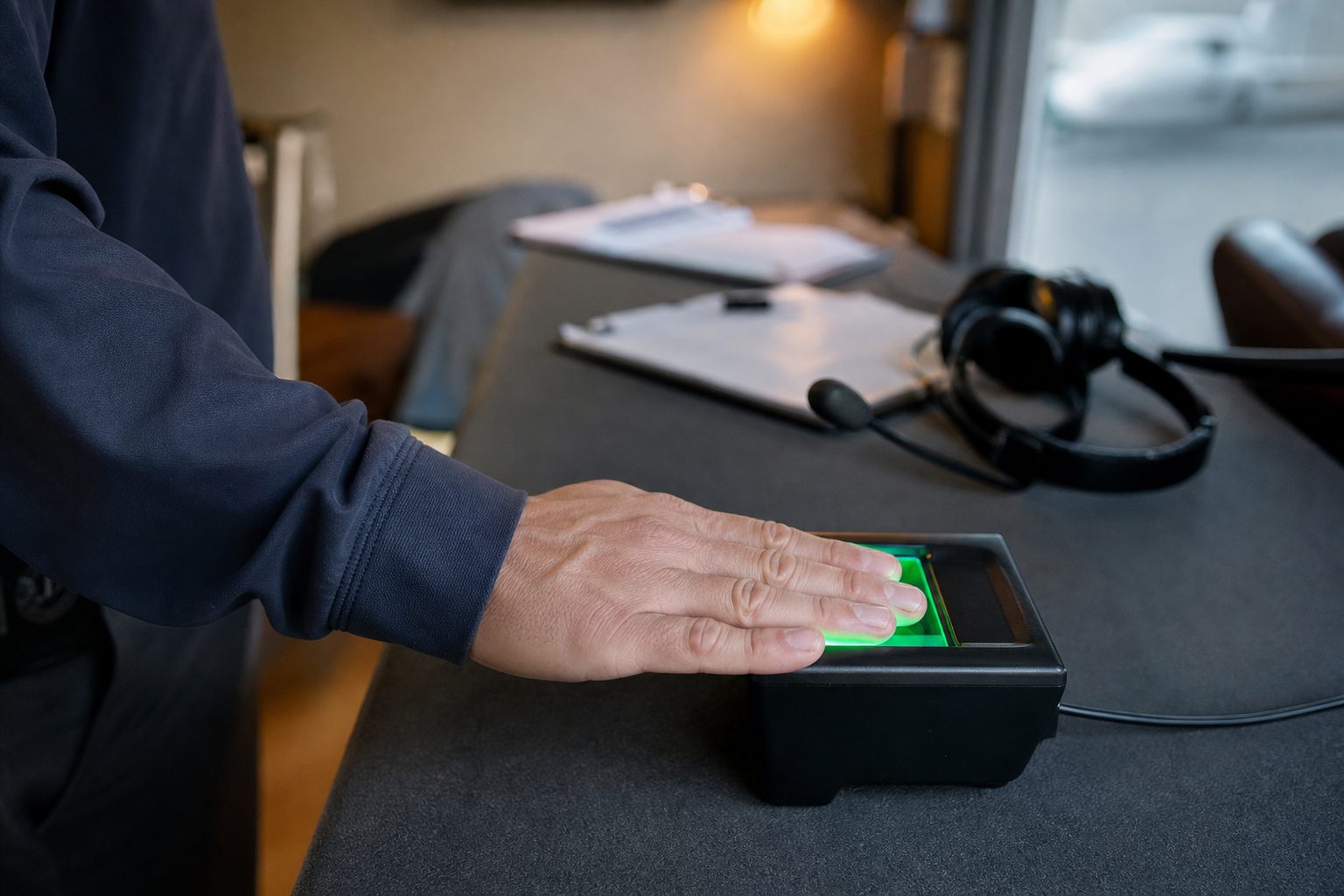
For most non-US citizen applicants, the TSA requires both a photograph and a fingerprint submission before training can begin. The photograph is usually uploaded by the student as part of the AFSP application. The fingerprinting process can only be completed after the application is submitted and initial approval is granted for fingerprinting.
Fingerprints must be collected by an authorized provider, such as a designated law enforcement agency or a commercial fingerprinting service approved by TSA. The provider submits the fingerprints directly to TSA. Many students can locate a provider through the TSA's website, but this step can add days or more to the process, depending on local availability.
The waiting period begins after the fingerprints are received and the AFSP has cleared the background check. Only then can you start flight training. You cannot give even a single hour of dual in an aircraft or simulator until TSA notifies you that the student is cleared. The average processing time depends on the category, the accuracy of the application, and whether additional information or clarification is needed. Mistakes in the application, missing documents, or delays in fingerprinting are common causes of hold ups.
If a student leaves the country and returns, or changes schools, you may need to repeat some or all of these steps. Always make sure both you and your student receive a clear "Permission to Initiate Training" notice before scheduling any lessons.
Notifying TSA When Training Starts
Once you receive TSA's authorization, you must notify the agency when actual flight training begins. This is not automatic. The instructor or school is required to log into the AFSP portal and enter the start date of the first lesson. Failing to do so is considered a violation of the regulation.
This step is critical for compliance. The TSA tracks the training period, and expects providers to update the portal if a student stops training, changes instructors, or otherwise deviates from the original plan. If a student's training is interrupted for more than 30 days, you must notify TSA and, in some cases, submit a new application or request reinstatement.
The same rule applies at the end of training. When the student has completed the syllabus, or if training is discontinued, you should update the record in the AFSP portal. Always document these notifications and retain evidence for your records. Electronic confirmation screens or email receipts from the AFSP system are acceptable forms of proof.
See how PreflightLog handles this for flight training
Security Awareness Training for Everyone on Staff
Every instructor, dispatcher, and staff member with access to flight training records or contact with students must complete annual security awareness training. This requirement is not limited to Part 141 schools or large operations. Even a one-person CFI business must comply.
The TSA provides an online training module that covers suspicious activity recognition, document handling, and the reporting process. Completion of this module or an equivalent program must be documented. The training is required within 60 days of hiring for new employees, and must be repeated every 12 months thereafter.
Keep a log that records the name, date, and method of training for each staff member. If you employ contract instructors or part-time help, ensure they have completed the same training. Failure to do so can result in penalties or loss of training provider status.
If your operation uses volunteers or interns who have regular contact with students or access to records, they must complete the training as well. It is best practice to include anyone who might be present in the training environment, such as maintenance staff or scheduling personnel, to avoid oversight if their role changes.
Records the Rule Requires and How Long to Hold Them
Recordkeeping is a major part of TSA compliance. The rule spells out exactly what needs to be recorded and how long you must retain each type of record. The basic requirements apply whether you are a large flight school or a solo instructor.
Proof of Citizenship Verification
For every student, you must make a logbook entry or a separate log, stating the date you verified citizenship, the documents you inspected, and the name of the verifying instructor. Do not keep copies of sensitive documents unless the student gives written consent. The TSA accepts a signed and dated statement in the student's or instructor's logbook, or a dedicated record in your files.
AFSP Application and Clearance
For non-citizen students, retain a copy of the AFSP approval notice, the notification of permission to initiate training, and evidence of training start and completion. This can be electronic or paper, but must be readily available for inspection by TSA or FAA personnel. You should also keep records of any interruptions in training or changes in student status, as reported to the TSA portal.
Security Awareness Training Records
Maintain documentation of each staff member's completion of the TSA security awareness training, including the date, type of training, and evidence of completion. This can be a certificate from the online module or a signed attendance sheet if you conduct group training sessions. These records must be updated annually and kept for five years from the date of training.
Retention Periods
All records related to citizenship verification, AFSP compliance, and security awareness training must be kept for at least five years. This period starts from the date of the last entry or the completion of training, not the start date. Make sure your recordkeeping system is organized and secure, as you may be asked to produce documentation during a compliance audit or investigation years after the fact.
Digital recordkeeping systems can simplify this task by organizing and storing both scanned and typed records in one place. Paper logs are acceptable but must be legible, complete, and accessible. Review your retention policy annually, and destroy records securely when the five-year period expires.
For flight schools and instructors who manage endorsements, stage checks, and practical test progress, a compliance-oriented system can help integrate TSA-required records with other student progress documentation. This reduces the risk of missed steps and ensures you are prepared for any audit or regulatory review.